Inter-Religion Marriage in India: Families, Law and Practical Steps
Inter-religion marriages are becoming more common in India. How couples handle families, an overview of the Special Marriage Act, and practical preparation.
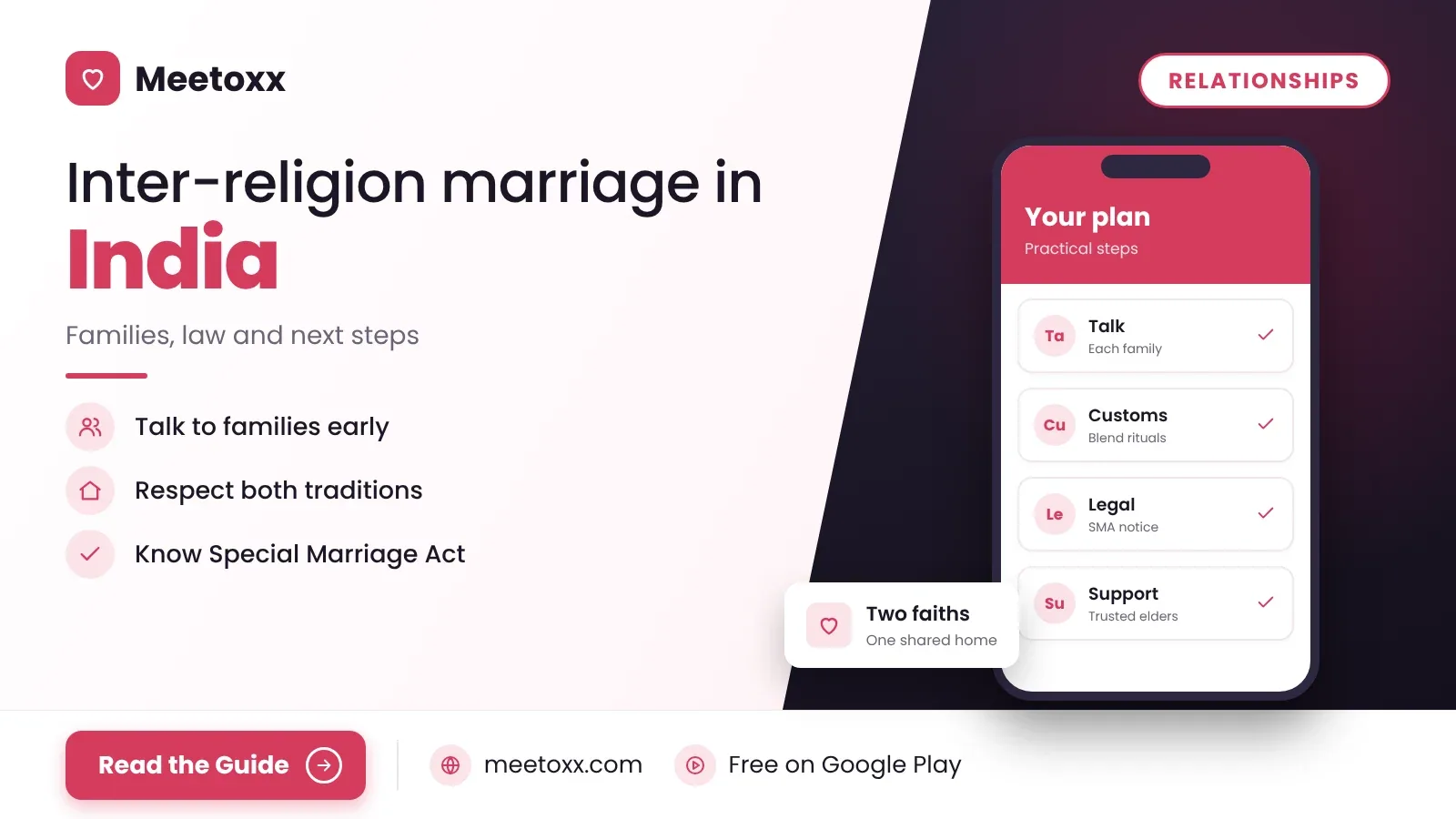
An inter religion marriage in India takes patience, honest conversations and some basic legal preparation. More couples in India are marrying across religions than a generation ago, especially in cities. It is rarely simple, but it is very possible with patience and preparation. This is general information, not legal advice.
Start with the two of you
Before families get involved, agree on the basics: how you will celebrate festivals, how you will raise children, whether either of you expects the other to convert. Couples who settle these first face family conversations with more confidence.
Talking to families
- Tell your own family first, ideally in person.
- Expect worry, not just objection, and listen to it.
- Let families meet in a relaxed setting before any wedding talk.
- Find an ally, such as a sibling or relative who supports you.
The legal side in brief
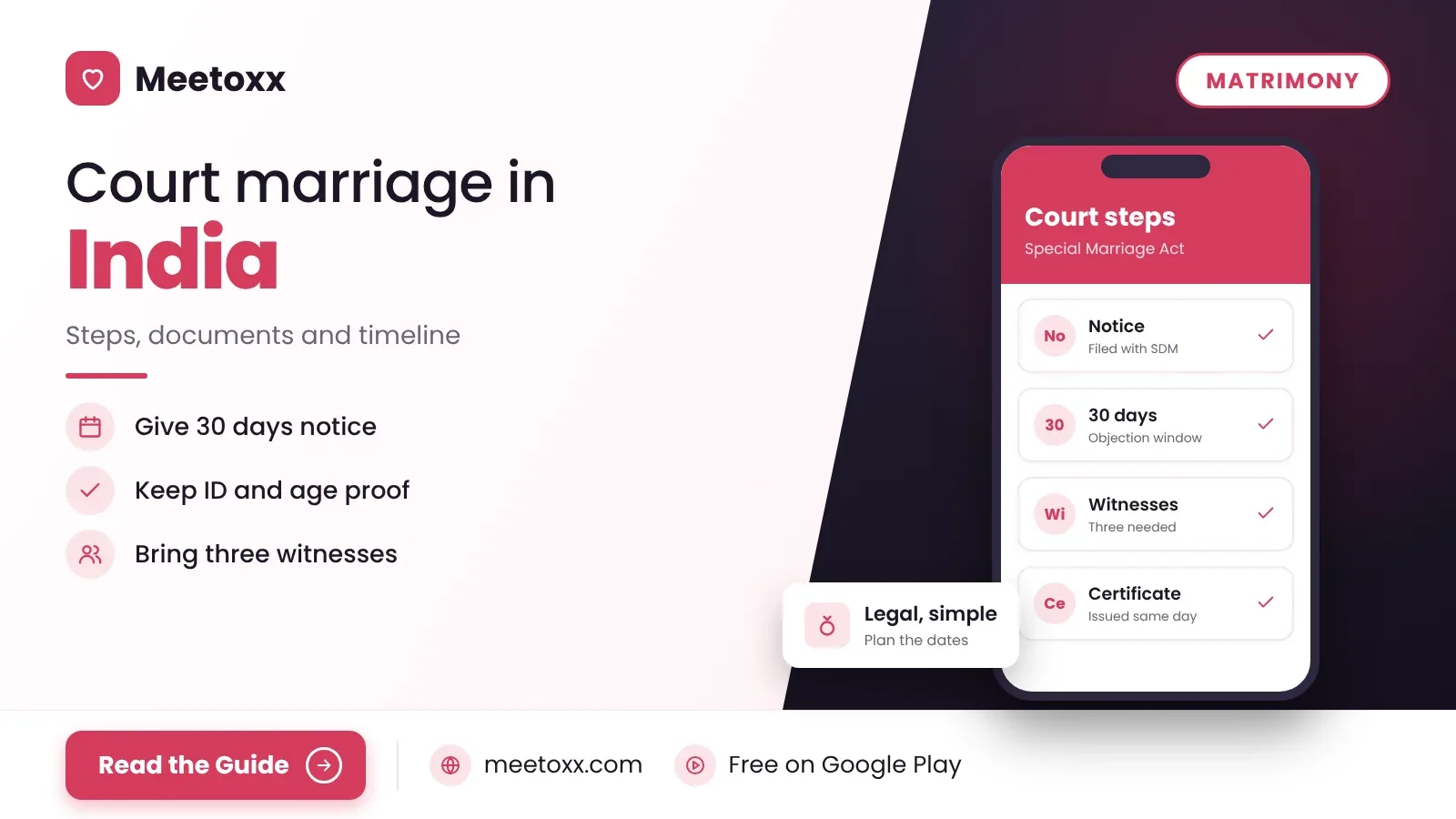
Couples of different religions can marry under the Special Marriage Act, 1954, without either person changing religion. It involves giving notice to the Marriage Officer of the district where one partner lives, a waiting period, and registration with witnesses. Procedures and documents vary by state, so speak to a lawyer or the local Marriage Officer before you start.
Practical preparation
- Keep identity, address and age documents ready for both of you.
- Plan the ceremony to respect both families where possible; many couples hold two celebrations.
- If you face threats, contact the police; courts have repeatedly upheld adults' right to choose their partner.
Finding support
Talk to couples who have done it. Their experience often helps families feel more at ease than anything you can say.
If you are looking for someone serious, Meetoxx is free on Google Play, every profile is phone-verified by OTP, and you can video call inside the app before you share your number.
Quick answers
Can people of different religions marry in India without converting?
Yes, under the Special Marriage Act, 1954.
Where do we register under the Special Marriage Act?
With the Marriage Officer of the district where one of you lives. Check local procedures or consult a lawyer.
Planning an inter religion marriage in India step by step
Couples who get through this well usually treat it as a project with stages rather than one big announcement. The order below is a common one, but adjust it to your families.
- Agree between yourselves first. Talk about festivals, food at home, how you would raise children, and whether either of you expects the other to change faith. Settle what is negotiable before families get involved.
- Tell one trusted family member. A sibling, cousin or understanding aunt can help you test reactions and pick the right moment for parents.
- Tell parents separately. Each of you speaks to your own parents first, calmly and without ultimatums. Expect the first answer to be cautious.
- Arrange a first meeting. Once parents are willing to listen, a short, respectful meeting with your partner, ideally at home, often softens fears more than any argument.
- Bring the families together. When both sides are ready, a meal or a small visit lets elders talk to each other directly.
Common worries families raise
Most objections fall into a few groups. Knowing them helps you answer with care rather than anger.
- What will relatives say? Parents often fear social judgement more than the partner. Reassure them that you will handle questions together.
- Will traditions be lost? Explain how you plan to celebrate both families' festivals and keep customs that matter to them.
- What about the children? Share what you have agreed about upbringing, names and religious education.
- Is this just infatuation? Show stability: jobs, savings, a realistic timeline and respect for their concerns.
Practical paperwork to prepare
Many inter-faith couples marry under the Special Marriage Act, which does not require either partner to convert. In general it involves giving notice to the marriage officer in the district where one partner has lived for a set period, a public notice period, and then registration with witnesses. Keep proof of age, proof of address and photographs ready, and check the current requirements with your local office or a lawyer, as procedures vary by state. This is general information, not legal advice. Our guide to court marriage in India covers documents and timelines.
Looking after yourselves
Some couples also find it useful to write down, together, the practical answers families are likely to want: where you will live, how you will share household costs, which festivals you will celebrate in which home, and how you will handle naming and religious education for children. Having clear, shared answers shows maturity and gives anxious parents something concrete to hold on to. It also helps the two of you discover any gaps early, while there is still time to talk them through calmly. Revisit the list every few months, because plans change.
These conversations can take months. Protect your relationship by keeping regular time for each other that is not about family pressure. If either of you feels unsafe at home, reach out to trusted friends, local support organisations or the police. Do not let anyone pressure you into a quick decision either way.
Meeting someone across faiths
If you are still looking for a partner and are open to someone from another faith, Meetoxx lets you filter by city, intent and language, and every profile completes a selfie check before messaging. You can chat and video call for free while your number stays private. Read more about cultural compatibility in marriage, or browse matrimony by city.